
-Ing Verbs

Who’s Your Reader
How to decide. Many forms of communication have a built-in recipient. For example, an email is going to a specific person or group for a specific reason. In those instances, you can pour all of your focus into your tone, pace, and message. But social media posts, blogs, or articles might be a little bit vague or open-ended as to who you want to find them. In that case, you need to decide who you want to talk to with each specific piece. Maybe you are writing to connect with your peers or maybe instead, you want to reach your clients. Those audiences are very different and thus, your writing (even if the message is similar) needs to be focused in different ways. Your boundaries are in different places, for starters. If you’re writing to your peers, they are already on the inside of what you do, they are behind the curtain with you so to speak. But if you’re writing for marketing, your future clients might not regularly use the abbreviations or language specific to your job. For that audience, you need to shift to more industry specific language, instead of department specific. Even within speaking to your clients, it’s best to know which clients you want to reach at different times or through different publications. Knowing who you are talking to can also help you tighten up your message so you don’t overwhelm your audience or try and relay too much information at one time.
You aren’t pizza. I read that comment the other day in reference to how we will rarely make everyone happy at the same time. (Although at our house, even pizza has to try hard. Why can’t everyone just get on board with mushrooms?) That’s why we need to pick our audience. Posts that are too ambitious, that overreach or try to talk to everyone, can fall flat and reach no one. Instead, it’s best to think about one person, or one type of person you want to reach with each publication. Maybe you want to use social media this week to market yourself to future clients. That is a different message than writing to reaffirm a current client. Or maybe you want to focus on a specific set of skills or services you offer instead. Even when writing out a marketing email, think of a single person you hope reads your words and then speak directly to them, like they were sitting across the table from you. Narrowing your focus and concentrating on a specific person or two will help your message be more authentic and clear.
We are maybe more familiar with the idea that we need a reason to connect with someone, the “what I’m trying to tell you” point of the story. But we also need to figure out to whom we are speaking in order to keep our communications, blog posts, social media, etc. not only on-brand but authentic and relevant as well.
When I sit down to write my blog posts, I think about saying all of this to one particular friend, as a way to explain to her exactly what I’ve been doing lately. This helps me stay grounded in the practical applications of my work and avoid language specific to a single industry — especially as I have clients that span a spectrum of business types.
I do like to slide in something for just for Chuck, to keep him honest when he says “of course I read your blog.” But that’s not necessary for everyone. Don’t worry, I’ll test him on it later.

Woman or Female?
Hear me out.
I was at a book signing and someone lost their handbag. One of the organizers of the event used the loudspeaker to ask the “female who lost their handbag to please stop by the information table.” It wasn’t me, so I didn’t think too much of it. But something about the announcement didn’t sound right to my ears. As we approached the author’s table to get our book signed, I heard someone near me say “female WHAT? Female isn’t a NOUN!” Ah! There it is. The announcement didn’t sound right because it wasn’t grammatically correct.
It got me thinking. I had been hearing female used as a noun in song lyrics and in pop culture for a while now. But here I was, surrounded by book people, talking to a successful and talented author and someone thought it was important enough to correct the announcer out loud. I was intrigued.
I looked up some definitions:
Woman: Noun. A female human being.
Female: Adjective. Of or denoting the sex that can bear offspring or produce eggs, distinguished biologically by the production of gametes (ova) which can be fertilized by male gametes.
So a woman can stand at the front of the room. Or a female scientist can stand at the front of the room. A woman scientist can stand at the front of the room because that is a compound subject/noun. But a female can’t stand anywhere because a female isn’t a thing, it’s a descriptor of a thing. (Also, it’s okay to just talk about scientists with no qualifiers at all!)
So what happens when you use female as a noun? You could sound like someone who writes pop culture song lyrics. Not necessarily a bad thing, depending on your audience. Or you could sound like someone who doesn’t understand grammar. Probably a bad thing, again depending on your audience. But here is the bigger problem: by using female as a noun, you can systematically create an environment where women are not only unequal, but where women are seen as a different species entirely — not human but chattel.
Take for example pairing the words man-female, like if someone were to write “a man and a female walk down the street.” Man, like the word woman, is a noun reserved entirely for the human species. But since female is an adjective, it is used in all kinds of scientific ways to denote specific sex characteristics. There are female parts to plants. You can have a female dog or fish or gerbil. By using the noun man paired with the adjective female, the author suggests the man walking down the street is human, but the other being isn’t. In this way, seemingly benign language choices are anything but. By using the word female as a noun, we allow the dehumanization of women in our speech and writing. I hope we can all agree this is dangerous.
No one likes having their grammar called out. But sometimes, we need to hold each other accountable for our word choices. How we talk about each other, how we “other” those different from us, and what we allow to go unchecked around us, can have lasting consequences far beyond what is said or written in the moment. Knowing when to use a noun and when to use an adjective can actually help us, help our society, as we strive for equality, unity, and peace for all.

Using Track Changes on Myself

Uncomfortable Conversations

Pick Your Audience

Female or Woman?

Be Kind. Rewind.
Most of us have been on the receiving end of some unkind feedback. Maybe from a boss, client, or yikes, even your editor. We know it stings.
I believe there is a better way to give feedback, a way where you can still be honest but no one cries in their car at the end. By employing a little kindness with our feedback, editors and clients can build a relationship based on trust. We can eliminate the fear factor from opening an email, knowing no matter what it contains, it will be conveyed with kindness. Giving kind feedback doesn’t guarantee you will escape all hurt feelings. But it can help you build a relationship, where everyone agrees we are working on a common goal.
When you’re giving feedback try these tips:
Remove yourself from the equation. You’re there to represent the reader. If something isn’t clear to you, then it’s not going to be clear to the reader. Letting your author know that “your reader will be lost here” is a kind way of delivering the message.
Don’t say “you.” Feedback that starts with “you,” especially if it’s followed by “should” or “need to,” can come across like you know better than the author what needs to be said. Try phrasing your comment differently taking out the “you” and making the issue at hand the subject of your comment. This makes the critique focused on the writing and therefore less personal and easier to hear.
Ask questions. Sometimes what you don’t like about a piece of writing is a style choice made by your author. Ask questions before passing judgment. It might be important to them for a number of personal reasons and after all, editors are not there to change or squash the author’s intended voice. Some authors want to have their grammar corrected, but some authors like it like that!
Cite your sources. If you need a little distance from saying “this is the wrong part of speech to use here,” try to cite the grammar rule to back it up. This also ties in with removing yourself from the equation. It’s not you OR them, it’s simply grammar. Blame CMoS.
Above all, the most kind comment you can make is an honest one. When it’s wrong, it’s your job as the editor or peer reviewer to say so. But you can choose to say so with kindness. Brutal honesty is hardly ever necessary. If we all ask ourselves the three gating questions taught by Bernard Meltzer; is it true, is it kind, is it necessary, we can save ourselves and our audience a lot of heartache.
We can practice receiving critiques of our work (or rejections of our suggestions) for what they truly are: a difference of opinion over the written piece at hand. Whether you’re the editor or the author, when you receive feedback on your work, remember that it is not a critique of who you are as a person and should have no bearing on how you view your worth or your talent. Editing is about making the writing the best it can be.

Kindness Matters
What Are You Reading?
Good stuff in = good stuff out

Working in Blocks
Whatcha Reading??
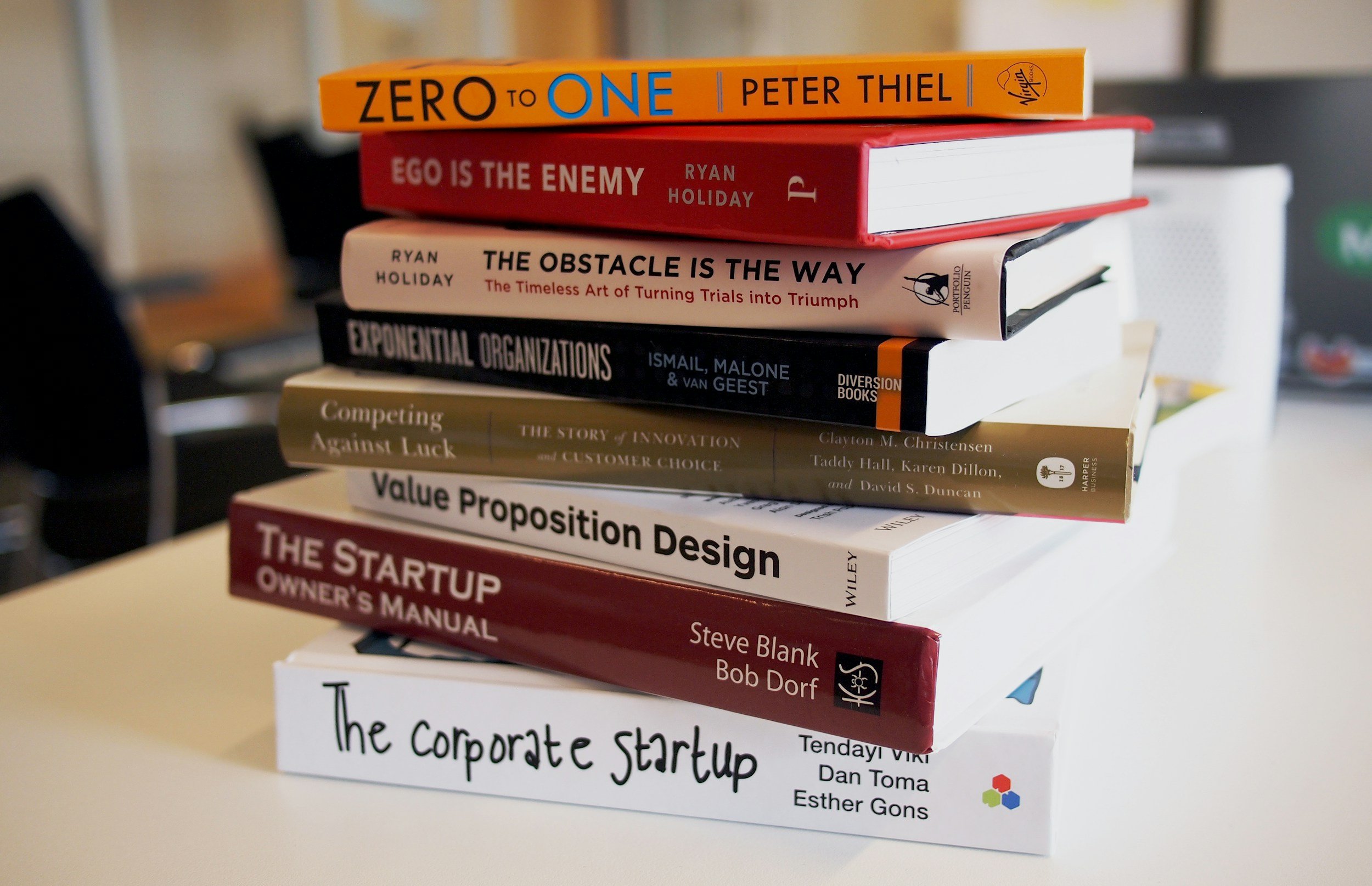
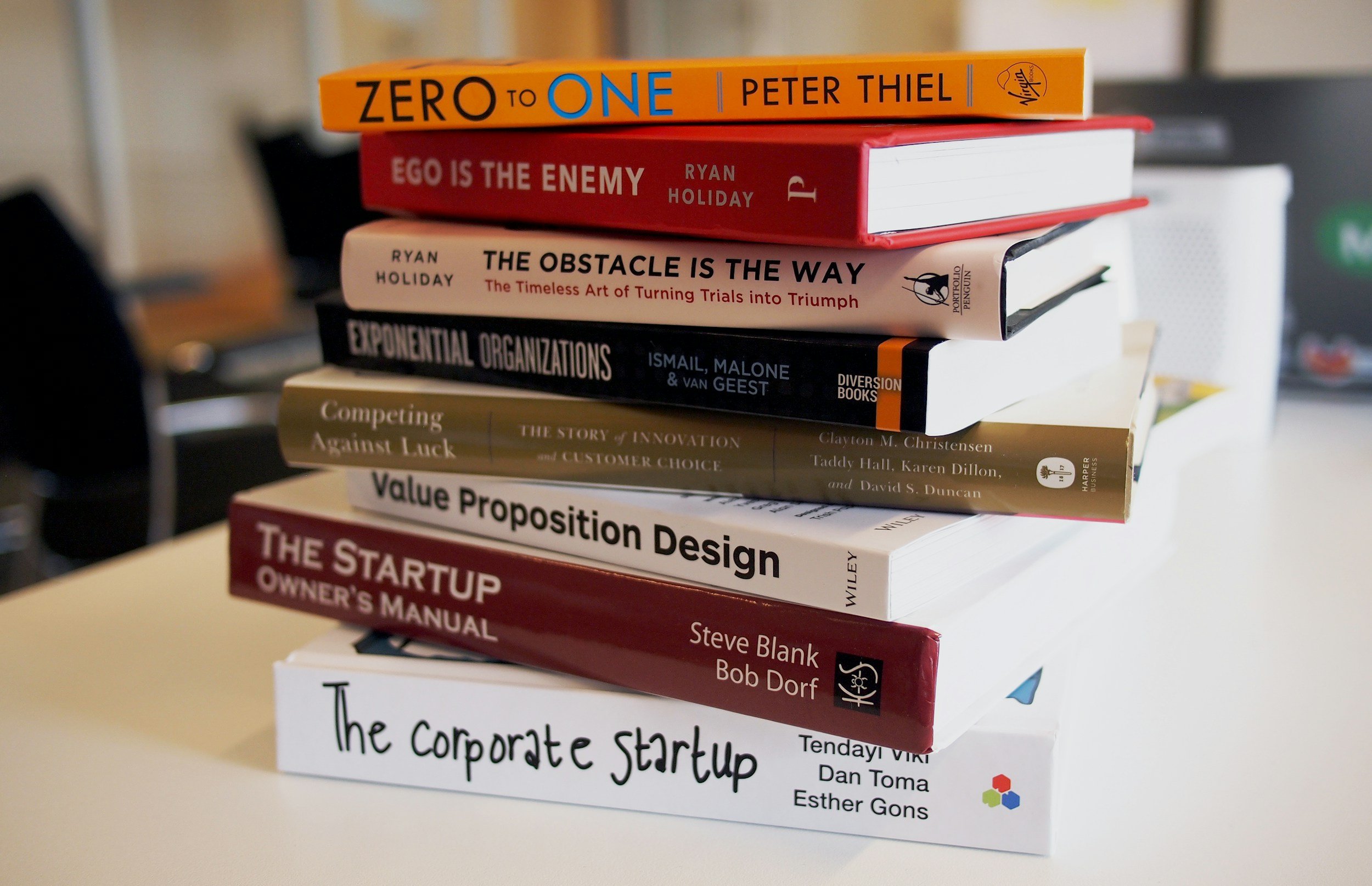
Professionally, I get to edit what other people have written, write for them, and also write for myself. You might think with that much time spent around the written word, I would spend my off-hours binging Netflix shows. And I do! But it can’t replace my love for reading or reading’s place in my profession.
As an editor/copywriter, here are the top three reasons I keep on reading:
Words in equals words out. When my kids were young, I introduced them to classic literature.I wanted them to recognize when a story was well-developed, when the characters were fully realized, and to hear the song of language through correct grammar and varied sentence structures. As someone who works with words, this principle of surrounding yourself with good words still holds true. The quality of the words I take in will equal the kind of words I can give out. So I want to make sure what I read has value.
Learn new things. No matter what I read, I want to walk away having learned something, about the world, myself, or even about using language. If I’m curious about a topic (or need schooled on a topic for a client) I’m going to dive deep into reading about it. And through the research into a topic, I also learn how that topic is discussed: its audience and industry vocabulary. Even reading fiction, I can learn a different person’s experiences or even a different way to communicate a story. And I love it when I need to look up new words!
Escapism. I work from my dining room table. That is not a complaint, I consider myself pretty lucky to have a great dining room table and a job that lets me enjoy it. But sometimes I need an escape! I can get away from my house, my circumstances, even my mood, by picking up a book and letting myself be transported into someone else’s life for a few minutes. Reading is NOT the same as being there and it will never replace my love of travel. But it’s an alternative to the monotony of WFH. And using a book to escape can help me return to work with a fresh perspective.
I have a relationship with every book I read. Some are turned into longtime friends, and others pass through. But each book I read is a chance to meet a new author, character, historic figure, or topic and even see myself within the pages.
What are you reading right now?
Working From the Road
Parts of Speech
A Basic Outline for Writing a Blog

Working with the clock
Sometimes time is on your side

Continuing Ed
For everyone

Style Guides for your writing
Why Elevated Editing

Welcome
I’m so glad you’re here.